We often think we are choosing how to live. Yet there are moments when a reaction arrives before we have understood what happened. Our voice rises. Our body tightens. We withdraw, defend ourselves, or say something we later wish we could take back.
Afterward, we explain: “That is just who I am.”
But how much of what we call “me” is a response we learned so long ago that we no longer notice it?
The psychological shadow offers a way to explore that question. It describes the parts of ourselves we have pushed outside our accepted identity: feelings we were ashamed of, needs we learned to hide, and qualities we were discouraged from expressing.
These parts may remain unseen while still influencing our behavior. The shadow drives from the back seat, and we call the journey our choice.
How we learn to leave ourselves behind
A child cries and hears, “Stop being weak.” Another questions an adult and is called disrespectful. A child expresses pride and is told not to show off.
Over time, belonging can become linked to hiding.
“I must not need too much.”
“I must not disagree.”
“I must always be strong.”
These lessons can become so familiar that we mistake them for our nature. We build an identity around what earns approval, while other parts of our experience become difficult to acknowledge.
Years later, someone who learned never to express anger may agree to every request, then grow resentful of the people asking. Someone taught to hide vulnerability may long for closeness, yet become defensive when another person gets close enough to see their uncertainty.
The original feeling has not necessarily disappeared. It may have found another way to speak.
When the present touches an old wound
Imagine someone offering a suggestion about your work. You hear criticism. Your chest tightens, and you immediately begin proving your competence.
The suggestion may have been poorly delivered. It may also have touched an old conviction: If I make a mistake, I lose my worth.
Without awareness, those two things merge. A present conversation becomes a battle over an identity formed years before.
This is where observation matters. We can ask:
What happened—and what meaning did I add to it?
That question does not dismiss the event. It helps us see the whole event, including what arose within us.
A strong reaction does not automatically mean projection. Sometimes we are recognizing dishonesty, cruelty, or disrespect accurately. Awareness allows us to examine our reaction while still holding another person responsible for their behavior.
We can understand ourselves and maintain a boundary.
The strengths we also hide
What we reject is not always destructive.
We may hide confidence because it once attracted ridicule. We may suppress creativity because practicality was valued above everything else. We may silence our voice because keeping the peace seemed safer than speaking honestly.
Then we meet someone who expresses those qualities freely, and something stirs. Perhaps admiration. Perhaps envy.
Instead of condemning the feeling, we can become curious:
What do I see in this person that I have not allowed myself to develop?
Admiration does not prove a hidden talent. But it can reveal a direction we want to explore.
You can feel it without becoming it
The turning point begins when we notice the difference between experiencing a feeling and allowing it to define us.
“I am angry” can become “I notice anger arising.”
The anger is still real. We have simply created room to observe its movement: the heat in the body, the story in the mind, the urge to retaliate.
From that position, we can ask what action serves the situation.
A feeling can be present without being placed in charge.
Acceptance means acknowledging what is here. It does not mean approving every impulse or excusing what we do with it. We may understand why we shouted and still owe someone an apology. We may recognize our fear and still need to speak honestly.
Awareness becomes meaningful through the choices it makes possible.
Bringing awareness into ordinary life
Begin with one moment of reaction.
Pause, if you can. Notice what is happening in your body. Name the feeling without insulting yourself. Then listen for the story beneath it: I am being rejected. I must win. I am not enough.
Ask what you know, what you are assuming, and what response you want to stand behind.
Perhaps you need to clarify a misunderstanding. Perhaps you need to say no. Perhaps you need to acknowledge that your reaction was unfair.
You will not catch every pattern immediately. Sometimes awareness arrives afterward. That still gives you a place to begin: repair what you can, understand what happened, and practice again.
The purpose is not to construct a flawless version of yourself. It is to become more honest about the forces shaping your life.
The shadow loses some of its influence when we can see it clearly. What follows may require patience, changed habits, difficult conversations, and support.
But a possibility has opened.
The next response does not have to be a repetition of the last.
— MbatiaQuotes
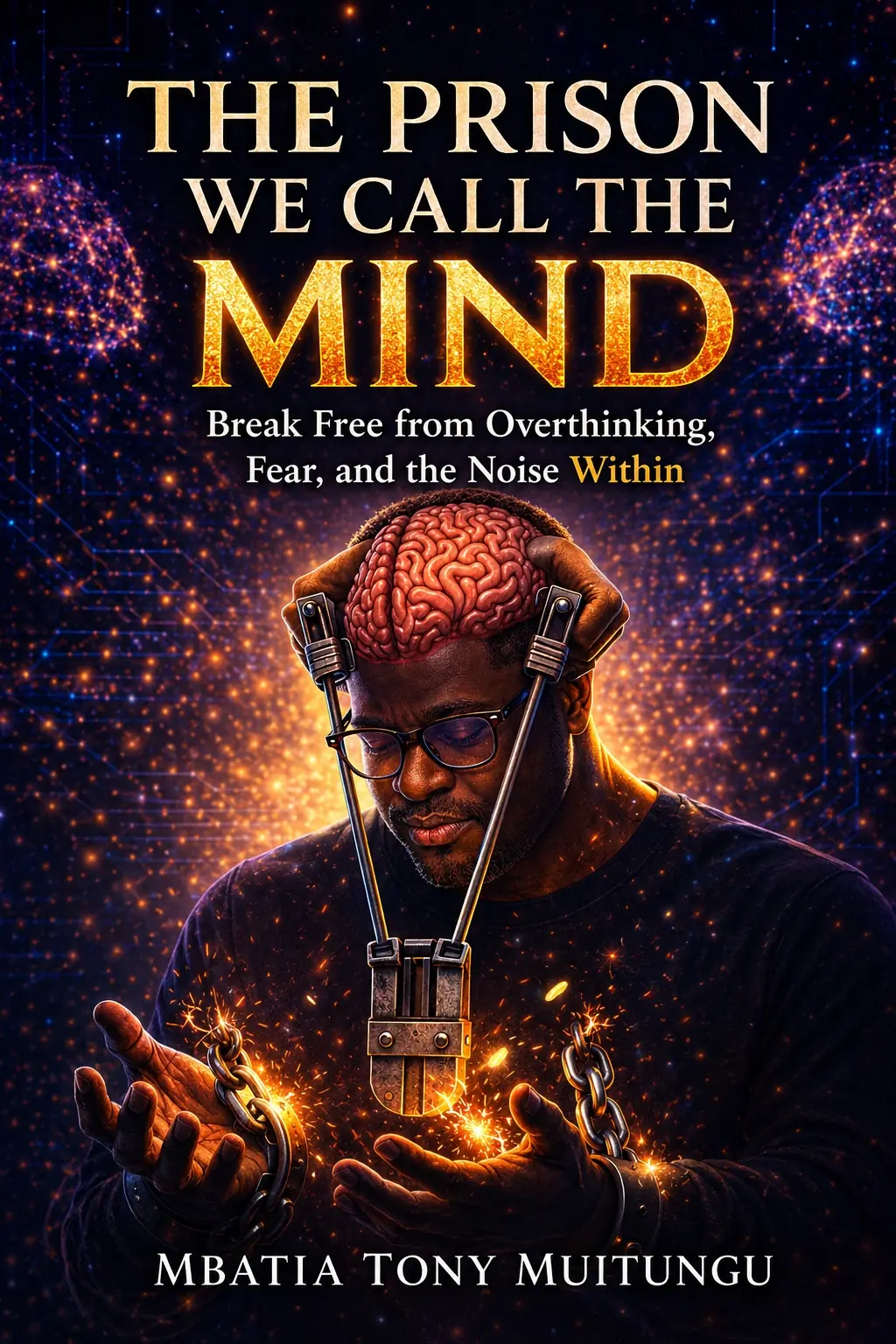
The Prison We Call the Mind
If this resonates with you, explore more in my book: an invitation to notice the stories shaping your life and discover greater freedom through awareness.
Explore the book on Amazon ↗